
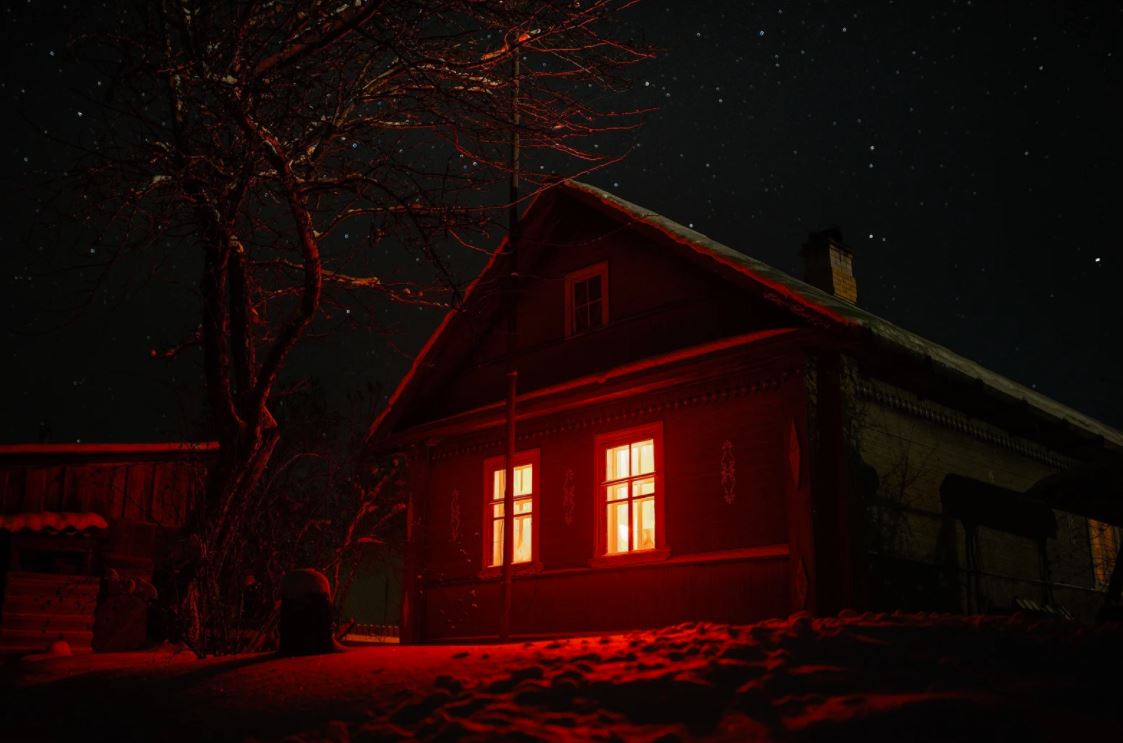
Hearing unexplained footsteps, seeing movement at the edge of your vision, waking unable to move, or feeling watched can be frightening. These experiences do not establish that a home is haunted. Buildings, appliances, animals, sleep transitions, stress, medication, vision or hearing changes, and health conditions can all produce experiences that feel mysterious.
Start with safety and observable evidence. You do not have to ridicule a spiritual interpretation, but you should not let it delay an urgent repair, medical assessment, or practical support.
Quick safety check
- Leave immediately for an active alarm or danger. If a carbon-monoxide or gas alarm sounds, you smell gas, someone is confused or unconscious, or breathing is difficult, get everyone and pets outside and call emergency services or the gas utility from a safe location.
- Do not investigate alone. Avoid attics, roofs, crawl spaces, damaged wiring, leaking fuel equipment, or an unknown intruder.
- Document before interpreting. Note the time, location, weather, appliances running, sleep state, witnesses, and exactly what occurred.
- Check the building. Use qualified professionals for electrical, heating, gas, structural, pest, mold, and lead concerns.
- Check health and sleep. Seek medical advice for new hallucinations, confusion, fainting, severe headache, repeated sleep paralysis, or symptoms affecting daily life.
Carbon monoxide and fuel-gas danger
Carbon monoxide is colorless and odorless. It can cause headache, dizziness, weakness, nausea, vomiting, chest pain, confusion, loss of consciousness, and death. The U.S. Centers for Disease Control and Prevention advises using working carbon-monoxide detectors and treating suspected exposure as urgent. If an alarm sounds or symptoms occur indoors, move to fresh air and call emergency services; do not re-enter until authorities say it is safe. See the CDC carbon-monoxide guidance.
A sulfur or rotten-egg odor may indicate an added odorant in fuel gas, not carbon monoxide itself. Do not switch lights or electronics on or off, light a flame, or try to find the leak. Leave and contact the gas utility or emergency services from outside.
A worked alarm response: the explanation can wait
Terry is a fictional adult who has been noting unexplained noises. When a carbon-monoxide alarm sounds, the task changes from interpreting a sound to getting urgent help. This example does not diagnose an exposure or describe a real household.
- The observation that changes the plan
- Terry hears the carbon-monoxide alarm sounding. Its cause and the gas level are unknown. The earlier unexplained noises do not explain the alarm or make it safe to ignore.
- The immediate action
- Terry leaves the building and contacts emergency services from a safe location. Getting outside takes priority over writing a log, collecting belongings, finding the source or completing a ritual. Terry does not silence the alarm, open fuel equipment or re-enter to investigate.
- The information to give from safety
- Terry tells the responder the location, the type of alarm if known, who may be inside and any symptoms already noticed. Unknown details stay unknown; Terry does not go back inside to fill gaps in the account.
- What remains unconfirmed
- No inspection, gas measurement, cause or health outcome is established by this story. Feeling better outdoors or hearing no further noise does not authorize re-entry or show that the home is clear.
- The next step
- Terry follows the emergency service’s and healthcare professional’s instructions, and does not return until the relevant authority says it is safe. Notes and any later repair discussion come after urgent needs. A spiritual interpretation or comforting practice cannot replace that response.
Use the sequence: respond to the actual hazard signal first, give the facts from safety and leave missing answers for qualified responders. An observation log is useful only when completing it does not delay help.
Ordinary sources of noises and movement
Houses expand and contract as temperature and humidity change. Pipes knock, ducts flex, refrigerators cycle, tree branches scrape, and loose windows rattle. Rodents, birds, insects, and pets can be active when a home is quiet. Reflections, vehicle lights, curtains, and small eye movements can create a glimpse at the edge of vision.
Keep a short log and look for repeatable conditions. A qualified contractor or pest professional can inspect safely. Do not open walls, disturb droppings, climb into unsafe spaces, or set hazardous traps merely to prove a theory.
Moisture, mold, and indoor air
A musty smell or visible growth deserves attention because moisture can damage a building and mold may trigger allergic or respiratory symptoms. The U.S. Environmental Protection Agency emphasizes fixing the water source, drying wet materials promptly, and cleaning visible mold appropriately. It does not support using a long, nonspecific symptom list to diagnose hidden mold exposure. Review the EPA’s mold health guidance and consult a health professional for persistent symptoms.
Large contamination, sewage, flooding, damaged porous materials, or risk to someone with asthma or a weakened immune system may require professional assessment. A spiritual cleansing will not repair a leak or remove contaminated material.
Lead and other environmental hazards
In the United States, homes built before 1978 may contain lead-based paint. Deteriorating paint and dust deserve qualified attention, but a building’s age or a symptom list cannot confirm a lead hazard. The EPA’s lead inspection and risk-assessment guidance distinguishes an inspection, which identifies lead-based paint and its location, from a risk assessment, which evaluates current hazards and actions to address them. Ask a certified lead professional about the appropriate assessment; do not scrape or sand suspected paint to investigate it yourself.
Do not begin supplements, chelation, or a “detox” because an online symptom list suggests heavy-metal exposure. Testing and treatment should be directed by a qualified clinician and, where relevant, an environmental professional.
Sleep paralysis can feel supernatural
Sleep paralysis occurs while falling asleep or waking: awareness returns while the body is temporarily unable to move or speak. A person may sense someone in the room, feel pressure, or see a frightening figure. The experience can be intense, but it is a recognized sleep phenomenon rather than proof of a spirit. The NHS sleep-paralysis guide notes links with disrupted sleep, insomnia, narcolepsy, PTSD, anxiety, panic disorder, and family history.
Regular sleep hours and adequate rest may help. Speak with a healthcare professional if episodes recur, make you afraid to sleep, or cause persistent daytime fatigue. New paralysis that occurs outside the transition into or out of sleep requires urgent medical assessment.
Hearing voices, seeing figures, or feeling watched
These experiences can have many causes, including grief, sleep loss, fever, migraine, hearing or vision changes, medication effects, substance use, neurological conditions, and mental-health conditions. Experiencing them does not make someone weak or “crazy,” and it does not by itself establish one diagnosis.
Arrange a prompt medical assessment when an experience is new, worsening, persistent, or disrupting daily life. Seek urgent help for sudden confusion, collapse, severe headache, weakness on one side, a seizure, inability to care for yourself, or commands to harm yourself or someone else. If there is immediate danger, call emergency services.
Our guide to clairaudient experiences and hearing voices keeps spiritual meaning separate from health and safety decisions.
How to evaluate an unexplained event
| Question | Useful evidence |
|---|---|
| When did it happen? | Time, duration, sleep state, lighting, weather, and appliances |
| Who noticed it? | Independent descriptions written before discussing interpretations |
| Can it repeat? | The same pipe, vent, door, reflection, animal route, or device |
| Did anyone feel ill? | Symptoms, location, alarms, and whether they improve outdoors |
| What changed recently? | Medication, sleep, stress, renovation, fuel equipment, pests, or water damage |
| Who can check it? | Emergency service, utility, clinician, landlord, or licensed contractor |
A phone recording or camera can sometimes identify a mechanical cause, but ambiguous noise and compression artifacts are not reliable proof of a spirit. Do not trespass, provoke an intruder, or sacrifice sleep to monitor a room.
If you still want a spiritual ritual
After urgent hazards have been addressed, a familiar prayer, opening curtains, tidying, or a simple nonflammable ritual may feel calming. Treat it as comfort, not as a test or cure. Avoid smoke if anyone has asthma, never mix cleaning chemicals, and do not apply unknown herbs or liquids to floors, pets, children, or skin.
The site’s grounded guide for a home that feels haunted offers gentle practices alongside practical checks. Also review spiritual tips to avoid before paying for help.
Leave any adviser who guarantees a haunting, threatens harm unless you pay, asks for escalating cleansing fees, discourages medical care, or requests gift cards, cryptocurrency, passwords, or private images. No one can verify a spirit from a symptom list.
Frequently asked questions
1. Do unexplained noises mean my house is haunted?
No. Pipes, ducts, temperature changes, appliances, animals, wind, and structural movement are common causes. Record the conditions and use a qualified professional for unsafe or persistent problems.
2. What should I do if a carbon-monoxide alarm sounds?
Get everyone and pets outside immediately and call emergency services from a safe location. Do not re-enter until authorities say the building is safe.
3. Can sleep paralysis make me see or feel a presence?
Yes. Sleep paralysis can include temporary inability to move, pressure sensations, and a sensed or seen presence while falling asleep or waking. Recurrent or disruptive episodes should be discussed with a healthcare professional.
4. Is it safe to perform a cleansing ritual?
A simple nonflammable ritual may be used for comfort only after practical hazards are addressed. Avoid smoke, flames, unknown substances, and any ritual that replaces repairs or healthcare.